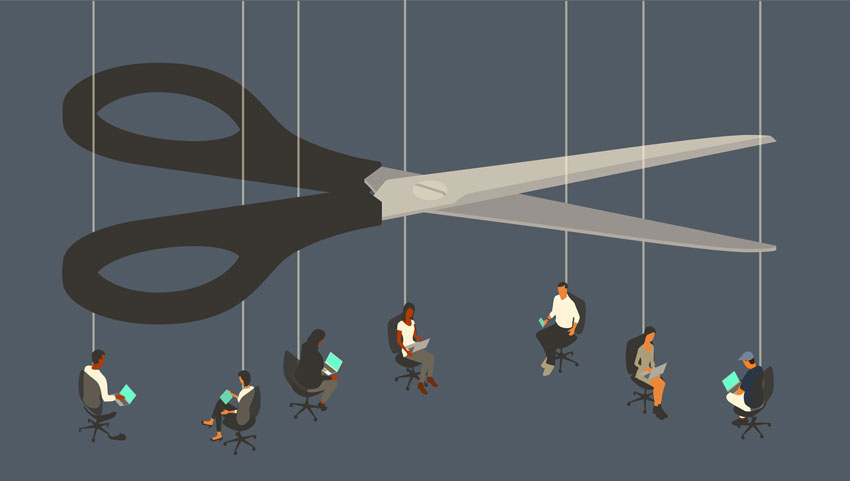
Mitigating the Adverse Effects of Layoffs
By Dr. Timo Sandritter, President & Rainmaker, RippleWorx
 The recent mass layoffs from big tech companies have been a cause for concern in the technology industry and well beyond. It is important to note that layoffs are a necessary part of doing business, and at times, businesses may have no choice but to let go of employees due to financial constraints or changes in strategy. However, the manner in which layoffs are conducted can have a significant impact on the affected employees, as well as the company's reputation and overall culture.
Recent layoffs have affected thousands of employees, and some were executed in a manner that has been criticized as insensitive and lacking empathy. A manner in which I would never condone doing business. Many were notified of their layoffs via email, while others had their online access removed without warning. Some showed up to work only to be surprised by the news.
The Impact of a Reduction in Force
The way in which some layoffs have been handled is indicative of a larger problem within many industries and larger corporations as a whole. The rapid pace of technological change and the constant pressure to innovate has led to a culture of cutthroat competition and a lack of empathy for employees. This has resulted in a workforce that is often treated as expendable rather than valued members of the team.
The damage these layoffs do to morale can be lasting. The people who remain will feel guilty for being spared while others were let go; they'll worry about whether their turn is coming next; they'll wonder if there's something wrong with them because they weren't cut loose along with everyone else; for some people, this stress can become so overwhelming that it leads to various mental health challenges by both the employees who were let go and those who remain.
What Steps Can be Taken to Enhance the Way Layoffs Are Handled?
I believe that one way for companies to improve the layoff process is to be more transparent and upfront about the reasons for the layoffs. Employees should be informed well in advance of any economic changes and given ample time to prepare for the transition. Understandably, there are cases where there isn't much time between the decision and the action, but in most cases, management knows about these upcoming reductions in forces in advance. This can help mitigate the shock and uncertainty that often accompany layoffs and can also help to build trust and understanding among employees.
Another way to improve the layoff process is to provide generous severance packages and support for affected employees. This can include things like outplacement services, counseling, and job search assistance. This can help employees feel more secure during the transition, and can also help to build loyalty and goodwill among the remaining workforce. We often hear the saying that “everyone is replaceable.” The same applies to employers. The way in which businesses conduct layoffs can impact the way they are seen in the public eye and impact the efforts to recruit new talent in the future. It can also contribute to higher turnover or employees not applying for new future opportunities.
Employee Development and Training Programs
Investing in continuing education for employees has always been essential, but it's especially critical during times of economic uncertainty and in times when we have seen so many layoffs done so poorly. Companies that prioritize the development of their employees are more likely to weather such storms and come out on top. The more we invest in our team members, the better we conduct business.
There are a few reasons why investing in continuing education is a smart move for businesses. First, it helps to ensure that employees are up to date on the latest industry trends and technology needed to do their job and beyond. This is particularly critical in the tech industry, where things are constantly changing, but also in many other industries where changes happen fast, and employees are constantly required to stay up to date on the latest developments. By providing employees with access to the latest training, companies can ensure that they are able to stay competitive and continue to innovate.
Continuing education also helps to improve employee engagement and motivation. When employees feel that their employer is invested in their development, they are more likely to feel invested in the company and motivated to do their best work. This can lead to increased productivity, improved job satisfaction and lower turnover rates.
Continuing education is not only beneficial for the growth and development of employees, but it can also serve as a safety net for potential layoffs. By equipping individuals with the necessary skills and knowledge to thrive in their positions, organizations can empower them to swiftly navigate the job market and secure new opportunities in the event of a layoff. We know that the job market changes rapidly, but the more we equip our employees, the better.
Investing in the continuing education of employees benefits not only the individual, but also the overall resilience and adaptability of the company.
The Moral Issue with Layoffs
Being let go by email or losing company access without proper warning or face-to-face communication is a bad business practice because it can be demeaning and disrespectful to the individual who has been let go. It can also be detrimental to their mental health and well-being.
Imagine having been employed with a specific company for many years. You were under the impression that you had a great relationship with your employer, only to be let go via email and then lose your digital access. If you imagine yourself in this situation, it doesn't feel good, does it?
The digital age has brought on many advancements and improvements in the workplace, making tasks more efficient and communication more seamless. However, it is important to remember that technology should never replace the humanness required in the workplace.
The personal connections, empathy, and emotional intelligence that human beings bring to the table are invaluable assets that cannot be replicated by automation and artificial intelligence. Could it be done on a smaller scale? Maybe in the future. Is it the best idea for layoffs on a larger scale? No. Strong relationships and effective communication are key to a healthy and productive work environment, and these are built on the foundation of human interactions. Human interactions (both positive and negative) have the ability to significantly contribute to someone’s well-being or, in the case of layoffs, have a negative impact on one’s health.
While layoffs are an unfortunate reality of doing business, companies have a responsibility to handle them in a way that is both respectful and compassionate to their employees. We have to consider the entire experience of the reduction in force and the lasting impact on the team members pre- and post-payoff.
It would be an understatement to say that it’s been difficult to witness the sheer volume of layoffs happening in such a way. Ultimately, we must always remember that at the end of the day, we are dealing with dedicated team members who, for the most part, invested in us as employers. The least we can do is add more humanness to this unfortunate reality of doing business.